
MRI in Houston
MRI uses a magnetic field and radio waves — no radiation — to produce the most detailed pictures of soft tissue available. It is what your doctor orders when the question is about discs, cartilage, ligaments, the brain or the spinal cord.
What an MRI shows
X-rays and CT are built around density, which makes them excellent for bone. MRI works differently: it reads how tissue responds to a magnetic field, so it distinguishes between structures that look nearly identical on other exams — a healthy disc from a herniated one, an intact ligament from a torn one, grey matter from white.
That detail comes at the cost of time. Most MRI exams run 20 to 45 minutes depending on the body part and whether contrast is used.
- Lumbar spine
- Cervical spine
- Thoracic spine
- Brain
- Knee
- Shoulder
- Hip
- Ankle & foot
- Wrist & hand
- Elbow
- Abdomen
- Pelvis
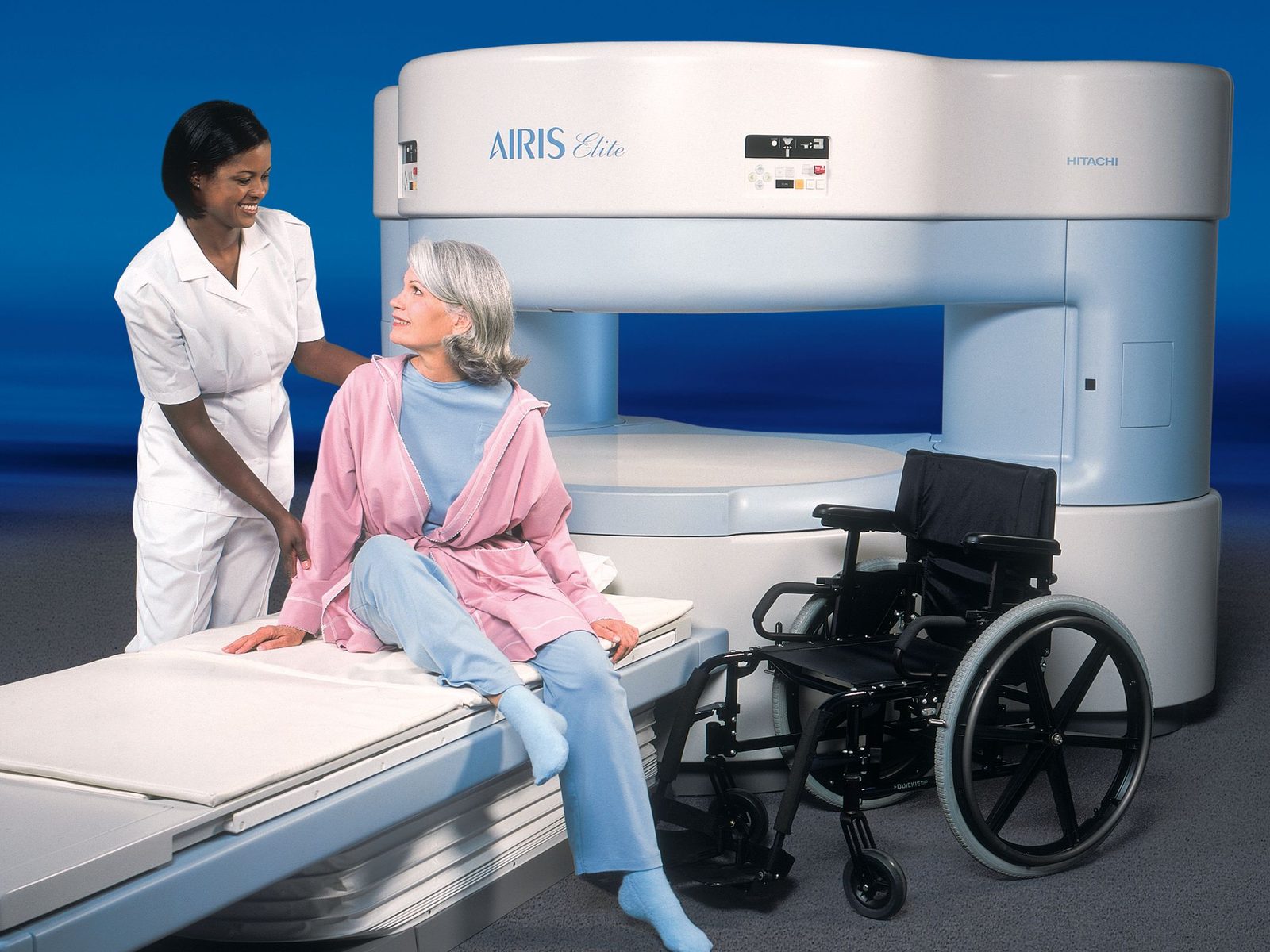
If a closed MRI has been a problem before, say so when you book. Our open MRI has the magnet above and below with the sides left open, which removes the enclosure entirely. Read about open MRI →
What the scan is like
You'll change into a gown or stay in metal-free clothing, then lie on a padded table. We position the body part being imaged and may place a coil — a small frame that receives the signal — near it.
MRI is loud. It knocks, buzzes and clicks in bursts, each burst being one sequence of images. We give you ear protection and speak to you between sequences to say what's next and how long it runs. You hold a call button the whole time; press it and we stop.
Holding still matters more than anything else for image quality. If you're uncomfortable, tell us before we start rather than trying to endure it — a two-minute adjustment beats a repeated scan.
Accredited in MRI
Our MRI service is an accredited facility of the Intersocietal Accreditation Commission. Our equipment, staff qualifications, image quality and safety procedures have been reviewed against published national standards.
Contrast
Some MRI exams use a gadolinium-based contrast agent given through an IV to make certain tissues, vessels or areas of inflammation stand out. Whether you need it is decided by the doctor who ordered the scan, not at check-in.
If contrast is on your order, tell us in advance about kidney disease or reduced kidney function, dialysis, a previous reaction to contrast, or if you are pregnant or breastfeeding. We may need a recent kidney function blood test first.
Safety screening isn't a formality. The magnet is always on. Tell us about a pacemaker, defibrillator, aneurysm clip, cochlear implant, neurostimulator, insulin pump, older stent, or any history of metal fragments in your eyes — before your appointment, not on arrival. Bring your implant card if you have one. Most joint replacements, plates, screws and dental work are fine, but we still need to know they're there.
How to prepare
- Eat and take your usual medications normally, unless we've told you otherwise.
- Wear clothes with no metal — no zippers, snaps, underwire or metallic thread.
- Leave jewelry, watches and piercings at home.
- Bring photo ID, your insurance card, and your paper order if you have one.
- Bring your implant card if you have any implanted device.
- Arrive about 15 minutes early for paperwork and screening.
You can build a checklist for your specific exam on the Your visit page.
Afterwards
There's no recovery period. You can drive yourself home and go straight back to normal activity. If you had contrast, drinking water afterwards helps clear it.
A radiologist reads your images and sends a report to the doctor who ordered the scan — that's who will go over the findings with you. You can also request a copy of your own images and report from us at any time.
The rest of what we scan.
Open MRI
Magnet above and below, sides left open. Built for claustrophobic patients, larger patients, and anyone who wants someone beside them.
Open MRI → Speed and densityCT scan
Cross-sections built from X-rays. Strong for bone, chest, abdomen, sinuses and stones. Usually under 15 minutes.
CT scan → First lookX-ray
Fractures, joints, chest and alignment. The fastest exam we do, often available the same day.
X-ray →Common questions about MRI
How long will I be there?
An MRI is generally 20 to 45 minutes depending on the body part and whether contrast is ordered. A CT is usually under 15 minutes and an X-ray is quicker still. Plan on arriving about 15 minutes early for paperwork.
How loud is it?
An MRI makes knocking and buzzing sounds while images are being taken — that's the machine working, not a problem. We provide ear protection, and we talk to you between sequences so you always know how much is left.
What if I need to stop partway through?
You hold a call button for the whole scan. Press it and we stop. Most people who need a break are able to finish after a minute or two.
I get very anxious. Can I have something to help me relax?
We can provide mild sedation on site. All medication is provided solely at the clinical discretion of our medical provider following an in-person health screening, so it is not something we can promise in advance. Ask when you book and we will schedule time for the screening. If sedation is given, you will need someone to drive you home.
Do I need contrast, and do I have to fast?
Your doctor's order specifies it. If contrast is ordered we'll tell you when we confirm your appointment and let you know whether to skip food beforehand. Tell us if you have kidney problems, diabetes, a prior reaction to contrast, or if you're pregnant or breastfeeding.
I have metal in my body. Can I still be scanned?
Call us before your appointment. Pacemakers, defibrillators, aneurysm clips, cochlear implants, neurostimulators, some older stents, and metal fragments in the eye all need to be checked first. Bring your implant card if you have one. Most joint replacements and dental work are fine, but we still need to know.
Book an MRI
Tell us what was ordered and we'll find you the closest opening.